
Film & Television · Mental Health Coordination
MENTAL
HEALTH.
BUILT IN.
From the first idea to the final cut.
DramaCare supports film and television productions with Mental Health Coordination and psychological expertise – from preparation through filming to post-production. An independent trusted contact on set is part of our MHC. Workshops and tailored support for cast, crew and production office staff complement this work. When children and young people are involved, we consider their protection from the outset.

Your next step
What do you need?
Commission support
Responsible for a production? Together we define your needs, objectives, scope and how support fits your schedule.
Explore how we workRecommend support internally
See a need within your team or department? Share this service overview with your production leads.
Access support
Is DramaCare supporting your production? Find out what you can discuss and how to access the agreed support.
Find your support route
DRAMACARE
A professional framework.
Built around your production.
DramaCare combines prevention, confidential guidance and practical mental health support in production. We clarify early what your team needs and which structures will help.
This includes work on set, the production office, leadership, communication and cooperation between departments. Scope and on-site presence are tailored to your project.
Workshops & training
Prepare leaders and teams: respectful working, managing stress, self-care, feedback and clear responsibilities.
Mental Health Coordination on set
Support people and working practices, understand pressures and agree next steps. The MHC also fulfils the trusted-contact role.
Mental Support Hotline
An agreed telephone support route for pressures and guidance, including between on-site days. Contact hours and response arrangements are agreed in advance.
These elements can be combined to suit your needs. Workshops and other agreed support formats may also be commissioned individually.
01 / Why mental health?
YOUR PARTNER
FOR MENTAL HEALTH.
Across the creative and media industries
Creative productions depend on people who bring passion, concentration and considerable personal commitment to their work. Time pressure, long working days, changing teams, sensitive content and complex responsibilities can place substantial demands on everyone involved.
Mental health belongs at the heart of production life. Actively considering the wellbeing of everyone involved – from cast and crew to the production office and production leads – helps establish the conditions for satisfaction, reliable collaboration, stable processes and creative performance.
Mental health in production life
The cultural, creative and media industries need support that understands how they work: artistic processes, commercial pressures, hierarchies, emotional intensity and the interaction of different departments.
Legal requirements and industry standards also underline that healthy working conditions are an organisational responsibility. DramaCare helps productions embed appropriate measures and clear routes to support in everyday work.
A documented approach to working conditions, prevention and team health can also strengthen the social dimension of a sustainability strategy and, where relevant to the organisation, contribute to ESG reporting.
On set, on stage, behind the camera or in the newsroom, DramaCare connects mental health support with an understanding of people, their collaboration and the conditions in which they work.
Creativity
Safety and trust create space for creative work.
Stability
Recognise strain early and find appropriate next steps together.
Collaboration
Respect boundaries, address tensions and strengthen communication.
Production flow
Build support into the places where it is needed in everyday work.
A picture of the industry
Film, television & workplace wellbeing
More than eight in ten respondents said the culture of the film and television industry negatively affects their wellbeing.
of more than 4,300 respondents said their work in film and television negatively affects their mental health.
of employees asked about the impact report that poor mental health makes it difficult to concentrate at work.
Looking Glass: respondents in the UK film and television industry. Mind: the wider workplace, with 10,504 respondents asked about the impact. Different questions and samples; these figures are not a time trend or an estimate for Germany.
Sources: Film and TV Charity, Looking Glass Survey 2022 and 2024; Mind, Workplace Wellbeing Index 2022/23.

02 / Mental Health Coordination
ONE POINT OF CONTACT.
AT THE HEART OF
PRODUCTION LIFE.
A Mental Health Coordinator (MHC) is a specialist in mental health for film, television, media and culture. As an independent point of contact, an MHC combines psychological expertise with an understanding of creative production.
Learn more about the MHC role
MHC combines prevention, confidential conversations, stress regulation, stabilisation and crisis intervention within the agreed scope. It also covers sensitive content, conflict guidance, leadership support, cast support and de-roling. Cast, crew and production office staff can access support early.
At DramaCare, the trusted-contact role is part of Mental Health Coordination.
Explore the trusted-contact roleA trusted contact within Mental Health Coordination
YOUR TRUSTED CONTACT ON SET.
Independent. Confidential. Professionally supported.
A trusted contact on set is an independent, confidential point of contact for cast, crew, production office staff and leaders. They provide guidance around pressure, conflict or boundary violations and help identify appropriate next steps.
At DramaCare, the Mental Health Coordinator fulfils this role in line with the Respect Code Film. As an external trusted contact for your film production, they work within a broader framework of psychological expertise, prevention and support.
Trust opens the conversation.
Expertise provides direction.
01A confidential first conversation
Space to talk and make sense of what is happening. A conversation does not automatically become a formal complaint. Contact routes, availability and the limits of confidentiality are clarified before production.
02Early guidance
Concerns, uncertainty and tension can be raised before situations escalate.
03Appropriate next steps
Depending on the concern, counselling, stabilisation, preparation for a conversation, protection routes or further specialist support may help. Mediation requires a separate assessment of suitability and an agreed remit.
04More than one conversation
MHC can bring in further support, such as stress regulation, cast support, leadership guidance, de-roling or follow-up.
In cases of bullying, discrimination, sexual harassment or other boundary violations, protection and guidance come first. These concerns are not automatically treated as a dispute between equal parties. Confidential support, separately agreed mediation and formal complaint handling are distinct processes; formal handling is not automatically included in the trusted-contact role.
Enquire about a trusted contact / MHCServices for film & TV
Bringing together the support
your production needs.
Individual measures or coordinated support across several phases: we develop the scope together.
Risks & needs
Needs assessment, Quick Risk Scan and shared priorities around relevant pressures and resources.
Scripts & sensitive scenes
Psychologically informed script feedback, sensitivity reading and advice on emotionally demanding content.
Awareness & working practices
Codes of conduct, awareness planning, accessible contacts and clear reporting routes for film productions.
Leadership & teams
Workshops, team kick-offs and leadership warm-ups on communication, responsibility, boundaries and de-escalation.
Support during the shoot
Conversations, stabilisation, support with tensions and de-roling: a deliberate transition out of character after demanding scenes.
Follow-up & supervision
Follow-up conversations, reflective supervision, post-production workshops and evaluation to inform future working practices.
03 / The production journey
EVERY PHASE HAS
ITS OWN NEEDS.
Explore how psychological support can become part of your production. Choose a phase and open the services relevant to your project.

A strong foundation for mental health.
Before the first shooting day, we work with you to establish a respectful and stable working environment.
Needs assessment & Quick Risk Scan
A focused initial review considers sensitive content, team structures and foreseeable pressures. Together we prioritise further assessment and appropriate support.
Psychosocial risk assessment
Sensitivity Reading
Sensitive content risk analysis
Code of Conduct & awareness
Stress & conflict management
Cast & crew preparation
Leadership support
Workshops for Heads of Departments
Workshops & training
Mental health support
Respect Code Film & support routes
We help translate the principles into practical agreements, responsibilities and response protocols. Define the trusted-contact role and support routes early.
Support when it matters most.
When deadlines, creative demands and team dynamics converge, accessible professional support matters.
On-set Mental Health Coordination
Confidential one-to-one conversations
Stress management
Crisis intervention
Conflict management
We help assess tensions and identify suitable next steps. Mediation requires a suitable, separately agreed remit. In cases of boundary violations, protection and guidance come first.
Leadership support
Cast support
De-roling
Mental Support Hotline
Preventing boundary violations
Feedback & evaluation
Trusted-contact role within MHC
Confidential guidance for cast, crew, production office staff and leaders. Explore the trusted-contact role.

Focused through the final cut.
After the final shooting day, emotional demands, transitions and collaboration still deserve attention.
Aftercare
Working with distressing material
Stress management
Mental Support Hotline
Supervision
Conflict & crisis intervention
Closing conversations
Evaluation
04 / Workshops for Heads of Departments
READY TO
WORK TOGETHER.
Respectful working · Leadership · Communication · Responsibility
Before filming or early in production, our workshops establish shared foundations for responsible leadership, clear communication and a positive production environment.
What does respectful working mean for this production, and what does it look like in everyday practice? We translate shared values into concrete agreements, behaviours, responsibilities and routes to support. We also consider the conditions that shape collaboration: time pressure, hierarchies, power imbalances, international teams, personal boundaries, duty of care, the German AGG and the Respect Code Film.

Expert input, reflection, discussion and practical exercises work together. Priorities reflect the actual needs and concerns of the production.
01Roles and a shared approach
02Leadership, power and impact
03Recognising strain and overload early
04Conversations and feedback under pressure
05Conflict management and de-escalation
06Boundaries, concerns and reporting routes
07Putting learning into practice
The value for your production
Lead with clarity.
Stay ready to act together.
Clearer leadership
Clarify responsibilities and expectations together.
Confidence to act
Address difficult conversations and pressures early.
Better coordination
Connect departments and involve appropriate support in good time.
Preparation followed by ongoing support
The workshop can be combined with coaching for the principal cast, on-set Mental Health Coordination and the Mental Support Hotline. Content and scope are agreed for each project.
Collaboration within international teams ↗05 / International collaboration
INTERNATIONAL TEAMS.
WORKING WELL TOGETHER.
International productions bring together people with different languages, experiences and working practices. This diversity enriches the creative process. Effective collaboration also requires a shared understanding of communication, leadership and how to respond to pressure.

Sharing a working language does not necessarily mean sharing the same expectations. People may approach feedback, decision-making or speaking up about boundaries differently. Under time pressure, these differences can contribute to misunderstandings, withdrawal or tension.
DramaCare helps teams recognise these differences early and establish a reliable framework for working together. This includes clear expectations, accessible communication and routes to support, alongside respect for personal boundaries and individual needs.
We consider different perspectives without making assumptions based on nationality or background. What matters is understanding what people need to contribute, take responsibility and feel able to raise difficult issues.
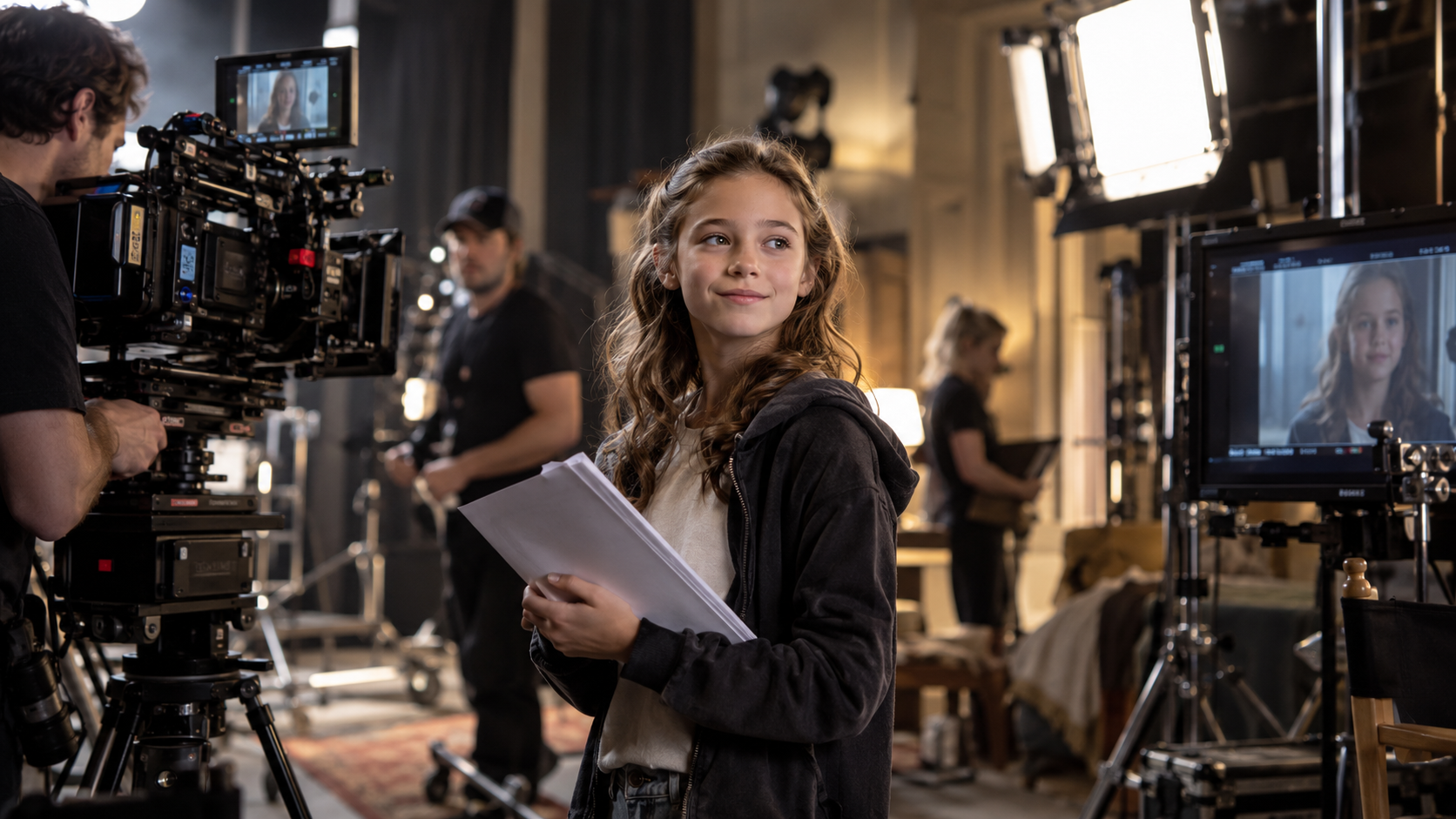
Children & young people in film and television
CHILDREN & YOUNG PEOPLE.
SAFEGUARDING ON SET.
Enable creative participation. Consider protection from the outset.
When children or young people perform on camera, protection starts long before the first scene. DramaCare supports specialist safeguarding planning around roles, sensitive material, working practices and care. Breaks, monitors, surroundings and last-minute changes are part of this picture.
The child’s perspective matters.
- Clear preparation
- Accessible contacts
- Effective stop signals
01Screening & risk review
A structured questionnaire considers the role, content, working conditions and potential pressures. Specialist review helps prioritise appropriate safeguards.
02Planning sensitive scenes
We look beyond the performance: what will the child see and hear, including on monitors or in nearby scenes? Preparation, clear explanations and an effective stop signal are considered.
03Safeguarding plan & clear responsibilities
A production safeguarding plan sets out contacts, breaks, quiet spaces and responses to last-minute changes. Responsibilities must be understandable to young participants.
04Involving parents, carers and production leads
We clarify expectations and communication with the production, parents and carers. The child’s perspective and boundaries remain central.
05Support on selected filming or rehearsal days
Psychological support for young performers can be agreed for sensitive material. Scope and the relationship with on-set care are clarified beforehand.
06Age-appropriate closure / de-roling
A clear ending helps distinguish the role from personal experience. Space for questions, decompression and follow-up is adapted to the young person’s age and circumstances.
- 01
Screening
Structured questionnaire
- 02
Review
Specialist assessment
- 03
Consultation
A shared discussion
- 04
Documentation
Written recommendations
Children on set: plan for authorisation early
For children’s creative participation in film, television, image or audio recordings under the exception in section 6 of Germany’s Youth Employment Protection Act, prior authorisation by the competent authority is required. The provisions for children also apply to young people in compulsory full-time education. The production clarifies eligibility, age limits, schooling and working times with the authority. DramaCare supports safeguarding planning; this does not replace authorisation, production responsibilities or legal advice.
Source: German Youth Employment Protection Act, in particular sections 2 and 6.
Children or young people in your production? Let’s discuss appropriate preparation and support early.
Discuss safeguardingSupport in practice
SHAPED AROUND
YOUR PRODUCTION.
An illustrative journey. The actual scope depends on the project.
Before filming
Risk analysis + team kick-off
Anticipate pressures and clarify roles and routes to support.
During filming
On-site MHC + hotline
Combine in-person support with an additional confidential conversation service.
Demanding scenes
Preparation + de-roling
Discuss boundaries and needs, support stabilisation and help performers step out of character.
When conflict arises
Conversation + mediation
Listen confidentially and develop appropriate ways to resolve the situation.
After wrap
Aftercare + evaluation
Reflect on experiences and support the transition out of production.
A confidential space to talk
MENTAL SUPPORT
HOTLINE
For cast, crew, the production office and production leads when stress, conflict or difficult scenes stay with them – or when they simply need a conversation.
Availability, response times and scope are agreed for each project. The Mental Support Hotline is not an emergency service or a 24/7 crisis line.
06 / Legislation & industry standards
MENTAL HEALTH IS ALSO AN ORGANISATIONAL RESPONSIBILITY.
DramaCare supports productions in implementing appropriate structures and measures.
This overview provides orientation for productions working in Germany. It is not legal advice.
ArbSchGGerman Occupational Safety and Health Act
Workplace risk assessments also consider psychological demands. Appropriate protective measures should follow from the assessment.
View source ↗ArbZGGerman Working Time Act
Regulates working hours, breaks and rest periods, among other matters. Production planning must take account of the applicable provisions.
View source ↗AGGGerman General Act on Equal Treatment
Protects against discrimination on the grounds specified in law and establishes protective duties in employment.
View source ↗DGUVAccident prevention & occupational health
DGUV regulations specify duties concerning accident prevention and health protection within the remit of statutory accident insurance institutions.
View source ↗Respect Code FilmRespectful and fair working practices
The Respect Code Film sets out industry principles for respectful, safe and discrimination-free work, including routes for advice and complaints. DramaCare helps translate these into clear responsibilities, prevention and everyday production practice.
Trusted-contact role within MHC07 / Benefits
YOUR + WITH
DRAMACARE.
DramaCare combines psychological expertise, industry understanding and practical support. We accompany people and teams through different production phases and help make mental health a tangible part of everyday work.
Support is tailored to the project. Financial or health outcomes cannot be guaranteed.
Clearer and more efficient production processes
Reducing absences and delays
Creativity, focus and performance
Supporting mental wellbeing
A respectful working environment
Sustainable production structures
Support with ethical standards and protective measures
Strengthening reputation and employer appeal
How the factors work together
Psychological safety
Concerns can be raised earlier.
Clear collaboration
Roles, boundaries and routes become easier to understand.
Creativity
Ideas have a more reliable space to develop.
Performance
Focus and the ability to act are strengthened.
08 / About DramaCare
PROFESSIONAL EXPERTISE.
ONE COORDINATED APPROACH.
DramaCare GmbH specialises in Mental Health Coordination and psychological support for film, television, media and cultural productions. Led by Heike Dzaack-Crostewitz, DramaCare combines psychological expertise with an understanding of production.
Our team brings together knowledge of psychology, psychotherapy, trauma work, stress management and crisis intervention. We combine this expertise with a practical understanding of creative processes and the demands of production life.
One central point of contact
The production has one point of contact for coordinating and organising the agreed services. Together, we clarify needs, appropriate measures, responsibilities and timing.
One coordinated approach
Needs and risk assessments, workshops, leadership support, cast coaching, on-set Mental Health Coordination, the Mental Support Hotline and aftercare can be connected. Work begun in preparation can be followed through during filming and after wrap.
Shaped around each production
Different projects need different support. We develop services around actual requirements: team structure, production phase, sensitive content, working conditions and available resources. Individual services and comprehensive support are both possible.
Support for everyone involved
Our services are for cast, crew, directors, Heads of Departments and the production office. People in leadership roles also need space to reflect professionally on pressure, responsibility and difficult situations.
Independent, confidential and accessible
Mental Health Coordination provides a professional point of contact outside internal hierarchies. Personal concerns have a protected space for discussion. Organisational coordination with production is clearly separated from the confidentiality of individual conversations.
From planning to aftercare
We aim to provide continuity that connects prevention, day-to-day support and responses to crises. This helps make mental health part of the production process beyond individual measures.
From early planning to aftercare: one point of contact for coordinated professional support.
Connected working worlds
FIND THE RIGHT
AREA OF SUPPORT.
Digital formats, editorial work, production and the stage overlap. Explore support for your wider work.
Content Creation
Mental health support for content creators, agencies and social media teams.
Support for Content CreationTheatre, opera & dance
Support throughout rehearsals, performances and ensemble work.
Support for Theatre, opera & danceActing
Individual support in professional life and for demanding roles.
Support for ActingMedia & newsrooms
Support for media organisations, newsrooms and freelance media professionals.
Support for Media & newsrooms
Your contact
HEIKE
DZAACK-CROSTEWITZ
Managing Director | Certified Mental Health Coordinator
EXPERTISE
Over 15 years of experience supporting people in emotionally challenging situations, with a focus on psychotherapy, trauma therapy, crisis intervention and stress management.
MENTAL HEALTH COORDINATION
Founder and Managing Director of DramaCare and one of the first certified Mental Health Coordinators in Europe. With a professionally qualified team, she combines psychological expertise and production practice.
INDUSTRY DEVELOPMENT
As a Trustee of the Association of Mental Health Coordinators, she works to embed mental health support in film, media and cultural production.
Every production has its own circumstances. Team size, shooting schedules, sensitive content, working conditions and existing support structures vary. Support needs may also change as a project develops.
That is why we deliberately do not publish standard package prices. We shape our services around the actual needs of your production.
An initial conversation helps us understand where support would be useful and which priorities matter most to your project. We then provide a tailored, transparent proposal setting out the scope of services, timing and fees.
Whether you need a preparatory workshop, support at specific points or coordination across several production phases, the scope and costs are clearly agreed before the work begins. Any additional services are discussed and agreed with you in advance.
Questions answered
FREQUENTLY ASKED QUESTIONS.
What is a trusted contact on set?
A trusted contact on set is an independent, confidential point of contact for cast, crew, production office staff and leaders. They help clarify concerns and identify appropriate next steps.
They listen, explain possible next steps and offer guidance on pressures or boundary violations. A conversation does not automatically initiate a complaint.
What is the difference between a Mental Health Coordinator and a trusted contact?
At DramaCare, the trusted-contact role is part of Mental Health Coordination. MHC also includes prevention, support during production and follow-up.
Is the trusted contact independent of the production?
DramaCare provides an external, professionally independent contact. The remit, confidentiality and its limits, and support routes are transparently agreed beforehand.
What happens when there is conflict, bullying or a boundary violation on set?
Concerns, protection needs and possible next steps are first discussed confidentially. Boundary violations are not automatically treated as a dispute between equal parties. Formal complaints follow a separate process.
What does the Respect Code Film mean for a production?
It sets out shared principles for respectful, safe and discrimination-free work. Implementation requires clear responsibilities, accessible support routes and practical agreements.
How does DramaCare support productions with children and young people?
DramaCare supports specialist safeguarding planning: screening, advice on sensitive scenes, clear responsibilities and, where agreed, support on selected days and age-appropriate de-roling.
Do children need official authorisation for film work?
In Germany, prior authorisation is required for creative participation under the exception in section 6 of the Youth Employment Protection Act. The production should clarify its case with the competent authority early.
When should a production involve DramaCare?
As early as possible, particularly for sensitive material, demanding roles, children or young people, complex or international teams, or foreseeable high pressure.
Does DramaCare work across Germany and internationally?
Yes. DramaCare supports film and television productions across Germany and internationally. On-site and remote support are tailored to filming locations, production phases and team needs. Language, availability and scope are agreed together before the project starts.
10 / Contact
LET’S TALK ABOUT
YOUR PRODUCTION.
Every production is different. Our work therefore starts with the actual needs and conditions of your project.
DramaCare GmbH
Ehrensteinstraße 24
04105 Leipzig
Germany